
ADHD Cleaning Planner Helps Beat Procrastination and Task Paralysis

Medically reviewed by Jessica Walsh, PMHNP, Board-Certified Psychiatric Mental Health Nurse Practitioner
We all know the feeling of staring at a messy room and feeling completely frozen. You want to clean, but an invisible barrier stops you from taking the first step. It can lead to a shame spiral, where you feel bad about an unfinished chore, which only makes the task feel heavier.
It is essential to know this freeze response is not a character flaw. Executive dysfunction is not laziness. Instead, think of it as a “startup disk error” in your brain. The desire to act is there, but the mental software required to initiate the task is temporarily struggling to load.
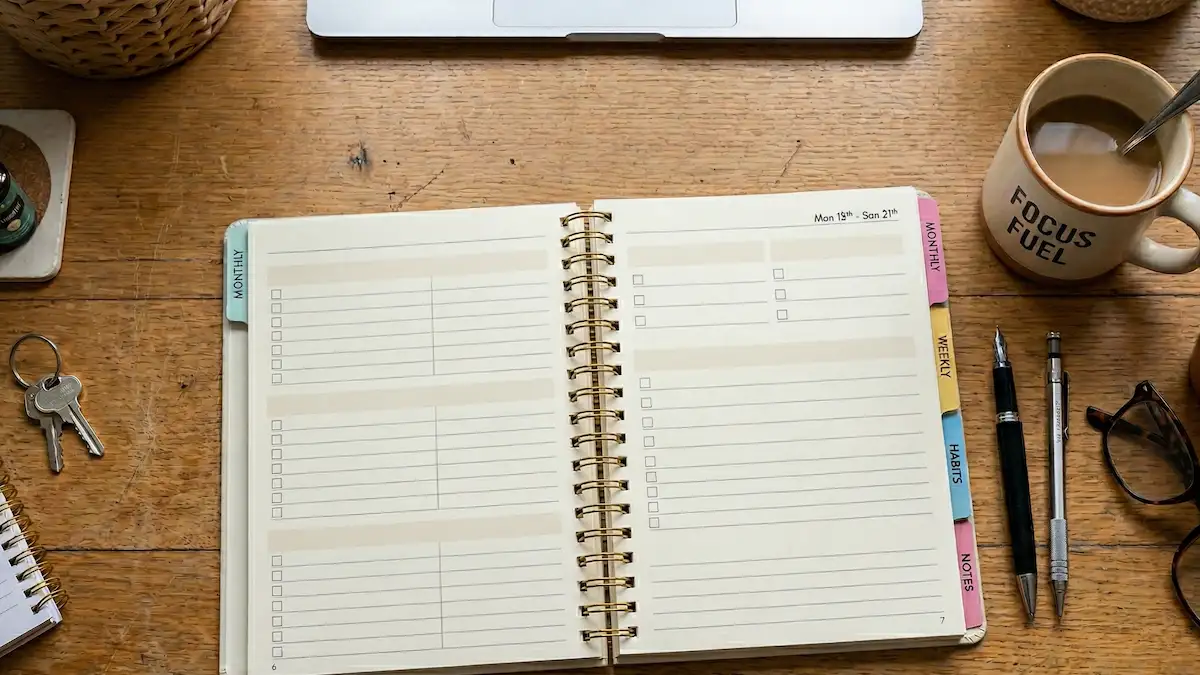
An ADHD cleaning planner is a gentle, effective tool designed specifically for how your brain works. By reading this guide, you will learn how to bypass that startup error, organize your way, and create a cleaning routine that actually feels rewarding.
Table of Contents
Why “Neurotypical” Advice Can Hurt
If you have ADHD, you have probably been told to “just clean for 15 minutes a day.” For a neurotypical brain, this sounds like a perfectly reasonable strategy. For an ADHD brain experiencing task paralysis, 15 minutes can feel like an eternity. Conversely, if you enter a state of hyperfocus, forcing yourself to stop after 15 minutes can disrupt your productivity entirely.
Traditional advice usually focuses on room-based cleaning, like tackling the entire kitchen at once. A better approach for ADHD is context-based cleaning. This means organizing tasks by category or energy level. You might gather all the trash in the house or collect all the laundry, rather than trying to perfectly scrub one specific room from top to bottom.
The Anatomy of a High-Dopamine Cleaning Planner
To help you achieve more, an ADHD cleaning planner must generate dopamine. Here is how you can set one up to work with your brain:
Micro-Wins and Gamification
Big tasks are overwhelming. A good planner breaks a massive project like “Clean the Kitchen” into tiny, highly achievable micro-wins. Writing down “Wash 5 Mugs” or “Wipe the counter” gives you clear, actionable steps. Checking these small items off provides an immediate sense of accomplishment.
Visual Anchors
Out of sight means out of mind. Object permanence is a common challenge for individuals with ADHD. Your ADHD cleaning planner needs to be highly visible and aesthetically pleasing. Keeping it out on the kitchen counter or pinned to the fridge acts as a visual anchor, gently reminding you of your goals without requiring you to remember to open an app.
The Brain Dump Section
Mental clutter makes physical clutter harder to tackle. Your planner should include a blank space to write down every distracting thought, worry, or unrelated to-do list item. Clearing your mind on paper allows you to focus solely on the cleaning task at hand.
The Verdict: Digital ADHD Tools or a Paper Planner
While digital tools are incredibly popular, a tactile, paper-based planner often wins for ADHD cleaning routines. Using a phone or tablet introduces a high risk of digital distraction. A physical paper planner keeps you anchored to the physical world.
| Feature | Paper Planner (Tactile) | Digital Planner (App) | The ADHD Verdict |
|---|---|---|---|
| Distraction Level | Zero. No notifications and apps that pull you in. | High. One notification can derail everything. | Paper wins for deep focus sessions. |
| Working Memory | Static. “Out of sight, out of mind.” | Active. Pushes reminders to your device. | Digital wins for time-blindness support. |
| Dopamine Hit | High. Physically checking off a task is a neuro-chemical win. | Moderate. Satisfying “dings”, but less visceral. | Paper wins for task completion momentum. |
| Felxibility | Low. Messy to “erase” or move tasks. | High. Drag-and-drop tasks to tomorrow without mess or guilt. | Digital wins for reducing “failure” shame. |
| Sensory Input | Grounded. Pen-to-paper movement helps “encode” information in the brain. | Minimal. Glass screens offer less sensory feedback. | Paper wins for long-term habit formation. |
Step-by-Step: Using the Planner to Break Task Paralysis
Once you have your planner set up, you can use these tailored strategies to initiate your cleaning routine.
The “Junebugging” Method
Junebugging is a strategy where you pick one specific spot, like the kitchen sink, and anchor yourself to it. You are allowed to wander away to put an item in another room, but you must always return to the sink. Your planner can help you define your anchor point for the day.
The “Body Doubling” Hack
Having another person present can significantly boost your focus. You can use your planner alongside a friend who is also cleaning their own space, or even invite someone to sit with you while you work. If a friend isn’t available, listening to a supportive podcast or calling a family member can replicate this comforting effect.
5 Keys Takeaways for Your ADHD Cleaning Planner
Finding the right support system can empower you to take control of your space. When creating or buying an ADHD cleaning planner, ensure it includes these five essential features:
- Customizable task lists: You need the freedom to break chores down into micro-wins.
- Dedicated brain dump zone: A place to capture distracting thoughts safely.
- Highly visible formatting: Bright colors and clear fonts to combat out-of-sight, out-of-mind tendencies.
- Context-based categories: Options to sort tasks by energy level rather than just by room.
- Tactile interaction: A physical format that keeps you away from digital distractions.
The Medicated vs. Unmedicated Cleaning Reality
For many in the ADHD community, the “cleaning engine” runs differently depending on where they are in their medication cycle. A truly effective ADHD planner doesn’t just plan for your “best” days, it plans for your “brain fog” days, too.
Cleaning With Medication: Managing the “Hyperfocus Trap”
When medication kicks in, the ADHD procrastination often crumbles, but a new challenge emerges: The Rabbit Hole. You might start by wiping the counter and end up three hours later disassembling the toaster with a toothbrush.
The Strategy: Use your planner to set Hard Boundaries. Before you start, write down “The Big Three.” If it’s not on the list, it doesn’t get cleaned today. Use a timer to “check in” with your planner every 30 minutes to ensure you haven’t drifted into a side-quest.
Cleaning Without Medication or during the “Crash”
Whether you are unmedicated by choice, due to a shortage, or simply in the “evening crash,” cleaning becomes an uphill battle against low activation energy. Every task feels like it weighs 100 pounds.
The Strategy: Low-Friction Wins. Switch your planner view to the “Zero-Energy List.” This should consist of “micro-tasks” that take less than 2 minutes.
Living with ADHD can present unique challenges, but it also comes with incredible strengths. By using tools designed specifically for your needs, you can simplify your routines and thrive in a comfortable, organized environment. Using an ADHD cleaning planner can be just what you need to manage your executive dysfunction around cleaning, but there are other options as well. The 1-3-5 Rule is another unique technique to overcome ADHD struggles.
If your ADHD is preventing you from functioning day to day, it may be time to reach out for additional help. Scheduling an evaluation with IN Focus First could be the next step to helping you manage your ADHD and find how it can be a superpower when managed well.
ADHD Cleaning Planner FAQs
Why do I keep buying planners and never using them?
Most planners are designed for linear thinkers. ADHD brains require “low-friction” entry points. If a planner feels like a chore, your brain will label it as a threat to your dopamine levels and avoid it. A successful ADHD cleaning planner focuses on flexibility and micro-goals rather than long, intimidating lists.
What is the “Junebugging” cleaning method?
Junebugging is an ADHD-friendly cleaning technique where you pick one “anchor point” and always return to it when you find yourself wandering off-task.
How do I start cleaning when I’m completely overwhelmed?
ADHD overwhelm often stems from Choice Paralysis. Your planner should include a “Parking Lot” or “Brain Dump” section. Write down every single thing bothering you, then circle only three tiny tasks. This lowers the “activation energy” required to actually get off the couch.
What are the best “low-dopamine” cleaning hacks?
Pair “boring” cleaning tasks with “high-dopamine” stimuli, such as audiobooks, body doubling, or a “gamified” reward system in your planner.
** Important Resource: ** If you or someone you know is in distress or immediate danger, help is available.
- 988 Suicide & Crisis Lifeline: Call or text 988 (USA) for free, confidential support 24/7.
- Crisis Text Line: Text HOME to 741741 to connect with a Crisis Counselor.
Medical Disclaimer: The information provided in this article is for educational purposes only. It is not a substitute for professional medical advice, diagnosis, or treatment. Never disregard professional medical advice or delay seeking it because of something you have read on this website. If you believe you are experiencing a medical emergency, call 911 or go to the nearest emergency room immediately.