
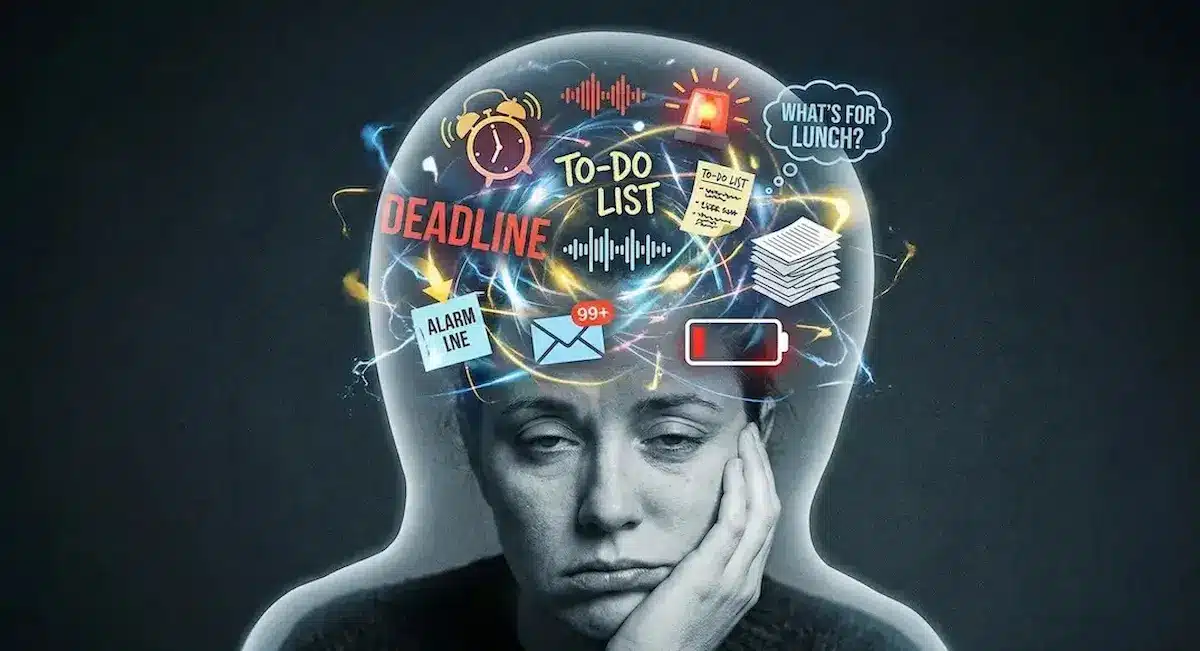
Why ADHD Brains Feel Exhausted All the Time

You know that feeling when your mind is racing a million miles an hour, but your body feels like it’s moving through molasses? It is a frustrating paradox. You might experience sudden bursts of restless energy and brilliant ideas, yet feel completely drained by the time you actually sit down to work.
If you live with ADHD, this constant cycle of high mental gear and profound physical exhaustion is incredibly common. It is not a character flaw. You are simply navigating a world that demands a lot from a brain uniquely wired to process it. And this explains exactly why ADHD brains feel exhausted all the time.
The Hidden Weight of Daily Life
We know ADHD brains feel exhausted for many reasons. And it isn’t just about needing more sleep. It is however a deep, cognitive fatigue that builds up over time. If your brain is feeling exhausted, you might find that some of these experiences feel familiar:
- The effort of starting: Some will spend hours just trying to initiate a simple task. This often will drain your energy before the work even begins.
- Constant masking: Many with ADHD, especially those who received a late diagnosis, hide their symptoms throughout the day. Holding back impulsivity and trying to appear focused in professional or academic settings. It becomes extremely exhausting for the brain and ultimately the body as well.
- Sensory overload: Processing every sound, light, and conversation in a busy room without an automatic filter to tune them out.
- Decision fatigue: Those with ADHD often feel paralyzed by small choices, like what to eat for lunch or which email to answer first. This is different from those described as indecisive.
- The emotional toll: Managing the frustration and anxiety that often accompany missed deadlines or forgotten tasks.
When you add all of these invisible efforts together, it is completely understandable why ADHD brains feel exhausted and depleted. When your brain is running a marathon every single day, of course you feel exhausted. And often, even if you can get a good night’s sleep, it is not always enough to recover from the daily marathons.
What’s Happening Inside Your Head?
The clinical explanation for why ADHD brains feel exhausted is incredibly straightforward. It honestly all comes down to how your brain manages neurotransmitters. Particularly how it handles dopamine and norepinephrine. These two are the chemicals that are responsible for motivation, focus, and reward.
In an ADHD brain, these chemicals are absorbed too quickly or they are not produced in high enough quantities for the brain to manage motivation, focus, and reward effectively. Because your baseline level of dopamine is lower, your brain has to work harder to stay on track during routine and unstimulating tasks.
It may help to think of it like driving a car with the parking brake on. You can still get to your destination, but it requires so much more fuel and effort from the engine. Over time, this constant overcompensation leads to severe mental and physical burnout.
Finding Your Path to Better Energy
Understanding the science behind your exhaustion is the first step toward feeling better. The next step is finding practical, customized ways to manage it. ADHD can be both a gift and a challenge, and with the right tools, you can organize your way to a more balanced life.
Gentle Behavioral Strategies
Behavioral management is about working with your brain, not against it. Beginning to make simple changes can help decrease the cognitive load that causes burnout. Working with your brain helps decrease the daily mental marathons you have been running.
- Digital Organization: Utilize user-friendly digital tools to simplify your to-do list. Large projects are overwhelming, breaking them down into small and more manageable steps can help you track your progress easily, build momentum, and decrease mental load.
- Scheduled Rest: Taking intentional breaks throughout your day before you hit the point of exhaustion decreases the toll of a difficult day.
- Environment Design: Decrease the sensory distractions in your workspace to save your mental energy for the tasks that truly matter. Decreasing clutter, unnecessary noise, bright lights, and other stimulation can help.
The Role of Medication
For many individuals, medication is a highly effective tool for when ADHD brains feel exhausted. Stimulant and non-stimulant medications work by balancing those crucial neurotransmitters, making it easier for your brain to focus without working quite so hard. When your brain doesn’t have to burn excess energy just to pay attention, you often find yourself with more steady, reliable energy throughout the day.
Take the Next Step Toward Balance
Living with ADHD means your energy is a precious resource. You deserve to have strategies and tools that help you protect it. Utilizing this information to better understand why ADHD brains feel exhausted is just the first step.
If you are tired of feeling drained and want to explore personalized treatment options, we are here to help. Reach out to IN Focus First today to discover custom planning systems, behavioral strategies, and clinical support designed specifically for you. You don’t have to navigate this journey alone.
FAQs
Why do ADHD brains feel exhausted all the time?
ADHD exhaustion isn’t just about lack of sleep. It’s about cognitive fatigue. Because ADHD brains often have a lower baseline of neurotransmitters like dopamine and norepinephrine, they usually have to work significantly harder to perform routine tasks. Especially mundane tasks. When the brain has to work this hard for too long, it can lead to mental and physical burnout.
What is “decision fatigue” and how does it affect ADHD?
Decision fatigue occurs when the brain becomes overwhelmed by the sheer number of choices it has to make in a day. For someone with ADHD, whose brain may struggle to prioritize information, even a small choice like “what to wear” can consume as much mental energy as a complex work project. By the afternoon, the brain’s energy tank is empty, leading to irritability or total paralysis.
Can ADHD medication actually help with physical tiredness?
Yes. While it seems counterintuitive to take a stimulant for exhaustion, these medications help balance the brain’s chemicals. When your neurotransmitters are stabilized, your brain doesn’t have to exert “emergency levels” of effort just to stay focused on a single task. By reducing the invisible mental strain, many people find they have more consistent physical energy throughout the day.
Why do I feel drained even after a full night’s sleep?
Sleep restores the body, but it doesn’t always reset sensory and cognitive overload. If your day is spent masking or navigating a high-stimulus environment, you are incurring a sensory debt. Traditional sleep doesn’t always pay off this specific kind of debt; often, you need brain rest, such as quiet time, low-light environments, or engaging in a hyperfocus hobby to truly recharge.
What are the best gentle ways to manage ADHD burnout?
The goal is to reduce the “friction” in your daily life.
1. Environment Design: Dim the lights or use noise-canceling headphones to stop the constant drain of sensory processing.
2. Micro-Steps: Don’t put “Clean Kitchen” on your list; put “Put the forks in the dishwasher.” This lowers the energy required to start.
3. Scheduled “Do-Nothing” Time: Give yourself permission to have gaps in your day where no decisions are required.
This information is for educational purposes and does not replace professional medical advice. Always consult with qualified healthcare providers regarding ADHD treatment options.
** Important Resource: ** If you or someone you know is in distress or immediate danger, help is available.
- 988 Suicide & Crisis Lifeline: Call or text 988 (USA) for free, confidential support 24/7.
- Crisis Text Line: Text HOME to 741741 to connect with a Crisis Counselor.
Medical Disclaimer: The information provided in this article is for educational purposes only. It is not a substitute for professional medical advice, diagnosis, or treatment. Never disregard professional medical advice or delay seeking it because of something you have read on this website. If you believe you are experiencing a medical emergency, call 911 or go to the nearest emergency room immediately.