
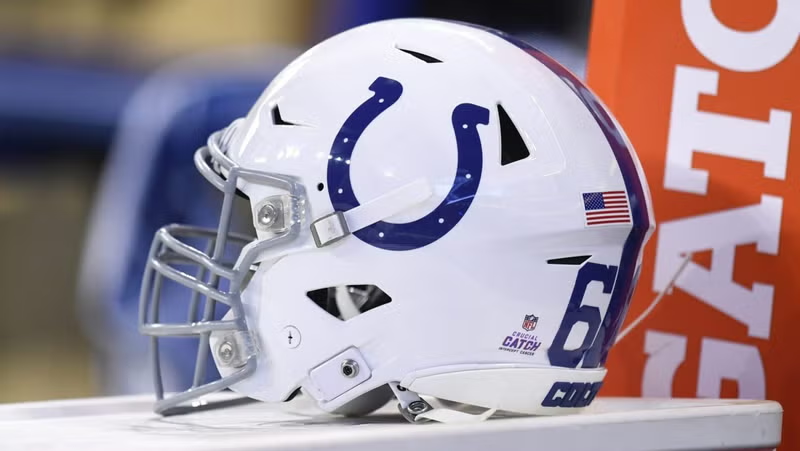
ADHD Case Study in Indianapolis

Medically Reviewed by: Olaniyi Osuntokun, MD, Board-Certified Psychiatrist
Indianapolis ADHD Case Study: IN Focus First helps Professional Football Player Restore Focus, Game-Day Consistency, and Mental Recovery
A professional football player based in Indianapolis struggling with focus inconsistency, mental fatigue, and post-game cognitive recovery underwent an adult ADHD evaluation at IN Focus First.
With structured diagnosis and carefully managed care, the athlete restored mental clarity, improved focus during preparation and competition, and enhanced recovery between games—supporting consistent high-level performance across the season.
Listen to this article
Athlete Profile (Anonymized)
- Profession: Professional Football Player
- Location: Indianapolis, Indiana
- Level: Active roster / rotational starter
- Environment: High-contact, high-pressure performance setting
- Cognitive Demands:
- Rapid decision-making
- Film study and playbook retention
- Situational awareness under stress
- Emotional regulation post-impact
The Challenge
Despite elite physical conditioning, the athlete began noticing mental performance inconsistencies that were increasingly difficult to ignore.
Primary Symptoms Reported
- Difficulty sustaining focus during film study
- Mental “noise” during game preparation
- Inconsistent recall of playbook details under pressure
- Heightened cognitive fatigue after games
- Slower mental recovery between practices
“Physically, I was fine. Mentally, it felt like I couldn’t always lock in when I needed to.”
Why This Was a Performance Risk
In professional football:
- Focus = reaction speed
- Mental clarity = execution
- Cognitive fatigue = injury risk
The athlete expressed concern that mental fatigue was being written off as normal wear-and-tear, when it felt more like an attention regulation issue than motivation or toughness.
Discovery of IN Focus First
The player sought a medical evaluation, not mental skills coaching or stimulatory shortcuts.
What Stood Out
- Adult ADHD experience
- Respect for athletic performance and recovery cycles
- Conservative, monitored treatment philosophy
- Emphasis on clarity and stability, not overstimulation
Evaluation & Findings
Comprehensive assessment indicated adult ADHD (combined/inattentive features) that had been masked by:
- Years of structured training
- External accountability
- Adrenaline-driven focus on game days
Key Insight:
Elite athletes often rely on adrenaline to regulate focus—until it stops carrying the load.
Intervention Strategy
1. Medication (Clinically Managed)
- Conservative dosing
- Timed carefully around training and competition
- Close monitoring to support focus without overstimulation
2. Managed Care & Recovery Integration
- Regular provider check-ins
- Attention to sleep quality and nervous system recovery
- Emphasis on mental endurance across the season, not short-term spikes
Measurable Outcomes (Over ~90 Days)
Cognitive & Performance Metrics
| Metric | Before Care | After Care |
|---|---|---|
| Film study focus | Fragmented | Sustained |
| Play recall | Inconsistent | Reliable |
| Mental fatigue | High post-game | Reduced |
| Game-day clarity | Variable | Consistent |
| Cognitive recovery | Slow | Improved |
Performance Impact
- Improved film study efficiency
- Faster mental processing during plays
- Greater emotional regulation under pressure
- Improved confidence in preparation and execution
“I felt more present — not amped, just clear.”
Quality-of-Life Improvements
- Reduced mental exhaustion off the field
- Better sleep consistency
- Improved separation between football and personal life
- Greater confidence in career longevity
Athlete Testimonial (Compliance-Safe)
**“I’ve always trained my body. I didn’t realize how much my focus needed the same level of attention.
The evaluation gave me clarity, and the managed care helped me stay mentally sharp without feeling overstimulated.
I feel more consistent week to week — and that matters at this level.”**
— Professional Football Player, Indianapolis (Anonymized)
Clinical Takeaway
This case reflects a growing reality in elite sports:
ADHD in professional athletes often shows up as inconsistency, mental fatigue, or recovery issues — not lack of discipline.
With proper diagnosis and managed care, mental performance becomes stable, repeatable, and sustainable.
Why This Matters in Indianapolis
Indianapolis supports athletes at every level — from youth to professional sports.
IN Focus First provides adult ADHD evaluations designed for individuals whose performance depends on clarity, recovery, and consistency, not hype.
Frequently Asked Questions
Can professional athletes have ADHD?
Yes. Many athletes compensate with structure and adrenaline until attention regulation issues surface under sustained cognitive demand.
Why does ADHD affect game preparation and recovery?
Film study, play recall, emotional regulation, and post-game recovery all rely on sustained cognitive control.
What does managed care mean for athletes with ADHD?
It means structured monitoring and follow-up to support focus and consistency without overstimulation.
** Important Resource: ** If you or someone you know is in distress or immediate danger, help is available.
- 988 Suicide & Crisis Lifeline: Call or text 988 (USA) for free, confidential support 24/7.
- Crisis Text Line: Text HOME to 741741 to connect with a Crisis Counselor.
Medically Reviewed by Olanyi Osuntokun, M.D.
Medical Disclaimer: The information provided in this article is for educational purposes only and does not establish a doctor-patient relationship. This content was medically reviewed by Olaniyi Osuntokun, MD, a board-certified psychiatrist. It is not a substitute for professional medical advice, diagnosis, or treatment. Never disregard professional medical advice or delay seeking it because of something you have read on this website. If you believe you are experiencing a medical emergency, call 911 or go to the nearest emergency room immediately.