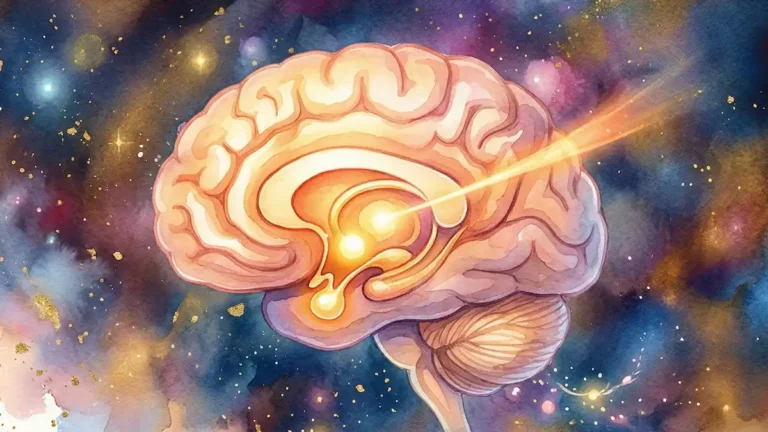
What New Brain Scans Reveal About ADHD Medications (Explained)

(A thoughtful response to “Brain Scans Reveal a Surprise About ADHD Medications” – What New Brain Scans Reveal About ADHD Medications (Explained))
On December 24, 2025, a major study published in Cell and reported by SciTechDaily shared surprising new insights about how stimulant medications for ADHD affect the brain. (Link)
Rather than showing increased activity in the classic attention centers, the brain scans revealed that medications like Adderall and Ritalin primarily activated arousal (wakefulness) and reward networks, not the regions traditionally linked with attention control. WashU Medicine
This has sparked a lot of questions — and some confusion — in the ADHD community. Let’s break down what this new research does and doesn’t mean, and how it fits into our understanding of ADHD treatment.
What Did the Study Actually Show?
The scientists analyzed resting-state fMRI scans from nearly 5,800 children and found the following:
- Children who took stimulant medication that day showed stronger activity in brain circuits tied to arousal (wakefulness) and reward anticipation, compared with those who did not. Medical Xpress
- There were no significant increases in activity in attention-control networks, which is where most textbooks traditionally say stimulants exert their effect. Medical Xpress
- In a small follow-up in adults without ADHD, the same pattern emerged. WashU Medicine
- The brain activity patterns seen with stimulants closely resembled the effects of good sleep — leading scientists to note that these medications can mimic the brain state of being well-rested. facebook.com
Why This Sounds Surprising — But Isn’t Necessarily a Revolution
Many of us were taught that stimulant medications “fix attention problems” by turning up the activity in prefrontal brain regions responsible for focus. But this study suggests something slightly different:
✔ Stimulants may work by increasing alertness and motivation rather than directly boosting attentional circuitry.
✔ They may make tasks feel more rewarding or engaging, which in turn helps someone stay on task. Medical Xpress
This doesn’t mean stimulants don’t help with attention — it means they may help attention indirectly by enhancing arousal and reward pathways that support sustained engagement.
That nuance is important.
What This Doesn’t Mean
This study doesn’t prove the following:
❌ Stimulant medications are ineffective for ADHD.
❌ ADHD isn’t a real neurological condition.
❌ All people respond the same way to medication.
❌ The benefit from stimulants is only “placebo.”
Quite the opposite — stimulants have decades of clinical evidence showing benefit for many individuals with ADHD. What this research does is deepen our understanding of how they exert that benefit. PsyPost – Psychology News
Sleep, ADHD, and Medication — A Critical Connection
One of the most intriguing parts of the study is how stimulants appeared to erase the brain-scan signature of sleep deprivation — almost like mimicking the restorative effects of sleep. facebook.com
That raises two key issues:
1. Chronic sleep deprivation can look like ADHD
A child who hasn’t had enough sleep may show similar patterns of inattention, impulsivity, or poor task engagement — not because they have a neurodevelopmental disorder, but because their brain is overtired.
2. Medications might be masking the symptom, not addressing the cause
If stimulants help an overtired child appear more attentive by temporarily overriding fatigue signals in the brain, the underlying sleep issue might still be causing long-term problems. facebook.com
This doesn’t mean stimulants shouldn’t be used — it means clinicians should evaluate sleep and energy as part of a complete ADHD assessment.
What This Means for People With ADHD
Here’s how to interpret this study in a practical way:
🔹 It reinforces that ADHD is complex
ADHD isn’t just a “focus deficit” — it’s a condition involving multiple brain networks, including motivation, reward valuation, and arousal regulation.
🔹 Stimulant medications still help many people
They can improve academic outcomes, reduce distractibility, and make tasks feel more engaging. Medical Xpress
🔹 Medication effects vary
Not everyone responds the same way — some people’s brains may react more in reward circuits, others less so. A one-size-fits-all understanding doesn’t hold up to imaging evidence. BrainFacts
🔹 Sleep and lifestyle are foundational
Addressing sleep, nutrition, and mental health can influence how someone responds to medication — and sometimes reduce the need for stimulants in mild cases.
Why This Matters to IN Focus First Patients
At IN Focus First, we focus on evidence-based ADHD care, which means:
🟡 We don’t just medicate symptoms — we explore underlying patterns like sleep, energy, and neurobiology.
🟡 We interpret medication effects through function (how you feel and perform), not just brain scans.
🟡 We tailor approaches — stimulants, non-stimulant medications like atomoxetine, behavioral strategies, and lifestyle interventions — based on individual brain chemistry and life context. Wikipedia
This new study supports our view that treatment cannot be purely formulaic — it must be personalized.
Bottom Line
The new brain imaging research reveals that stimulant medications may enhance wakefulness and motivation more than direct attention circuits. That’s a powerful insight — but it doesn’t undermine the clinical utility of these drugs for people with ADHD.
Rather, it expands our understanding and underscores the importance of holistic, individualized care — exactly the approach at InFocus First.
Frequently Asked Questions About ADHD Medications and Brain Scans
Do ADHD medications actually change brain activity?
Yes. Brain imaging studies show that ADHD medications do change brain activity, but not always in the way people expect. Instead of directly “turning on” attention centers, stimulant medications often increase activity in arousal, motivation, and reward-related networks, which indirectly support focus and task engagement.
Do stimulant medications improve attention or just wakefulness?
The latest research suggests stimulant medications may improve attention by increasing wakefulness and motivation, not by directly fixing attention circuits alone. When the brain is more alert and tasks feel more rewarding, sustained focus becomes easier — even if traditional attention networks are not significantly altered on brain scans.
Does this mean ADHD is caused by being tired?
No. ADHD is a neurodevelopmental condition involving multiple brain systems, including executive function, reward processing, and impulse control. However, sleep deprivation can worsen ADHD symptoms and sometimes mimic them. This is why proper sleep assessment is critical during ADHD evaluation and treatment.
Can ADHD medication mask sleep deprivation?
Yes — and this is one of the most important takeaways from the research. Stimulant medications can temporarily override the brain’s fatigue signals, making someone appear more focused even when underlying sleep debt exists. This doesn’t mean medication is wrong — but it means sleep must be addressed alongside treatment.
Does this research mean ADHD medications don’t really work?
No. ADHD medications remain clinically effective for many people, with decades of research supporting their benefits. This study doesn’t negate their usefulness — it simply clarifies how they may work and why responses vary from person to person.
Why do some people feel calm on stimulants instead of energized?
Many individuals with ADHD experience a calming effect from stimulant medications because the medication improves regulation in arousal and reward systems. When those systems are underactive, stimulation can actually normalize brain function rather than overstimulate it.
Why do ADHD medications help some people but not others?
Medication response depends on many factors, including:
- Individual brain chemistry
- Sleep quality
- Anxiety or burnout
- Dose and formulation
- Co-existing conditions
Brain scan research reinforces that ADHD is not one-size-fits-all, and neither is treatment.
Do these brain scans prove ADHD is real?
While ADHD was already well-established as a legitimate condition, brain imaging studies like this add biological evidence that ADHD and its treatments involve measurable brain network differences. That said, brain scans are not used clinically to diagnose ADHD — diagnosis remains symptom- and function-based.
Should brain scans be used to decide ADHD medication?
Not at this time. Brain scans are valuable for research, but they are not diagnostic tools for individual treatment decisions. Effective ADHD care still relies on careful clinical evaluation, symptom tracking, and real-world functional outcomes.
Does this research apply to adults with ADHD too?
Yes. Although the largest datasets are often pediatric, smaller adult studies show similar patterns. Adults with ADHD may experience medication benefits related to arousal and reward systems, especially in high-demand cognitive environments.
Can non-stimulant ADHD medications affect the brain differently?
Yes. Non-stimulant medications work through different pathways and may affect brain networks more gradually. For some patients — especially those with anxiety, sleep issues, or stimulant side effects — non-stimulants can offer more stable benefits.
What does this study say about ADHD productivity “hacks”?
This research highlights why productivity systems alone often fail. ADHD is not just a planning problem — it involves brain state, energy regulation, and motivation. Without addressing those foundations, even the best productivity rules can fall apart.
Should someone reconsider ADHD medication after reading this?
Not automatically. Instead, this research encourages better conversations:
- Is the medication improving quality of life?
- Is sleep being addressed?
- Are crashes or fatigue occurring?
- Is the dose optimized?
Medication decisions should be individualized, not reactionary.
How does this research influence ADHD treatment at InFocus First?
At IN Focus First, this research supports our approach:
- Looking beyond symptoms
- Evaluating sleep, energy, and nervous system regulation
- Managing medications intentionally
- Avoiding one-size-fits-all solutions
ADHD care works best when treatment aligns with the whole person, not just a diagnosis.
What’s the most important takeaway from the brain scan research?
The biggest takeaway is this:
ADHD medications don’t simply “force focus.”
They influence deeper brain systems that affect how alert, motivated, and engaged someone feels — which explains both their benefits and their limitations.
Final FAQ Takeaway
Brain scan research doesn’t invalidate ADHD medication — it humanizes it.
It explains:
- Why medication helps some people dramatically
- Why others feel crashes or fatigue
- Why sleep and burnout matter
- Why personalized care is essential
And it reinforces one core truth:
ADHD treatment works best when it’s thoughtful, managed, and individualized.
Medically Reviewed by Olanyi Osuntokun, M.D.
** Important Resource: ** If you or someone you know is in distress or immediate danger, help is available.
- 988 Suicide & Crisis Lifeline: Call or text 988 (USA) for free, confidential support 24/7.
- Crisis Text Line: Text HOME to 741741 to connect with a Crisis Counselor.